A14 Improvement Scheme - Board 36 Brampton Hut Services monolith
Description
The A14 Cambridge to Huntingdon Improvement Scheme was led by MOLA-Headland Infrastructure (a consortium of Museum of London Archaeology and Headland Archaeology) and was funded by National Highways. These interpretation boards were installed by Cambridgeshire County Council with Oxford Archaeology East as part of a project funded by National Highways.
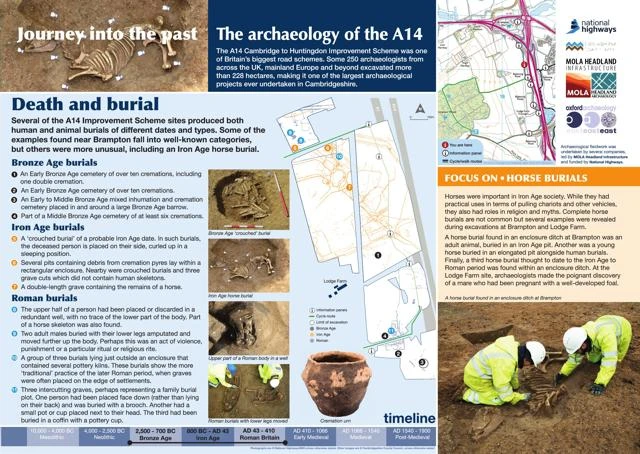
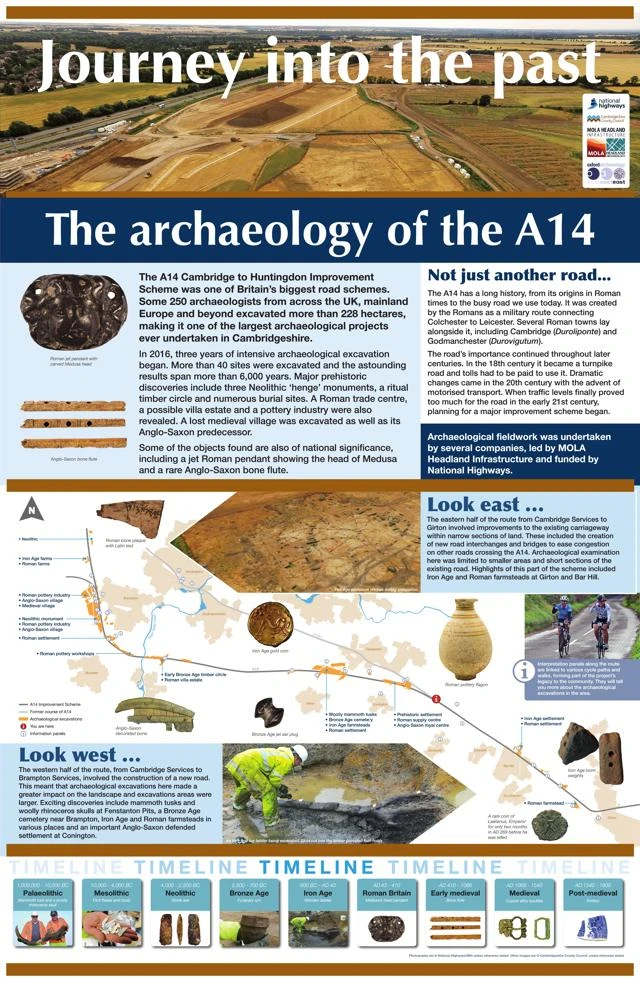
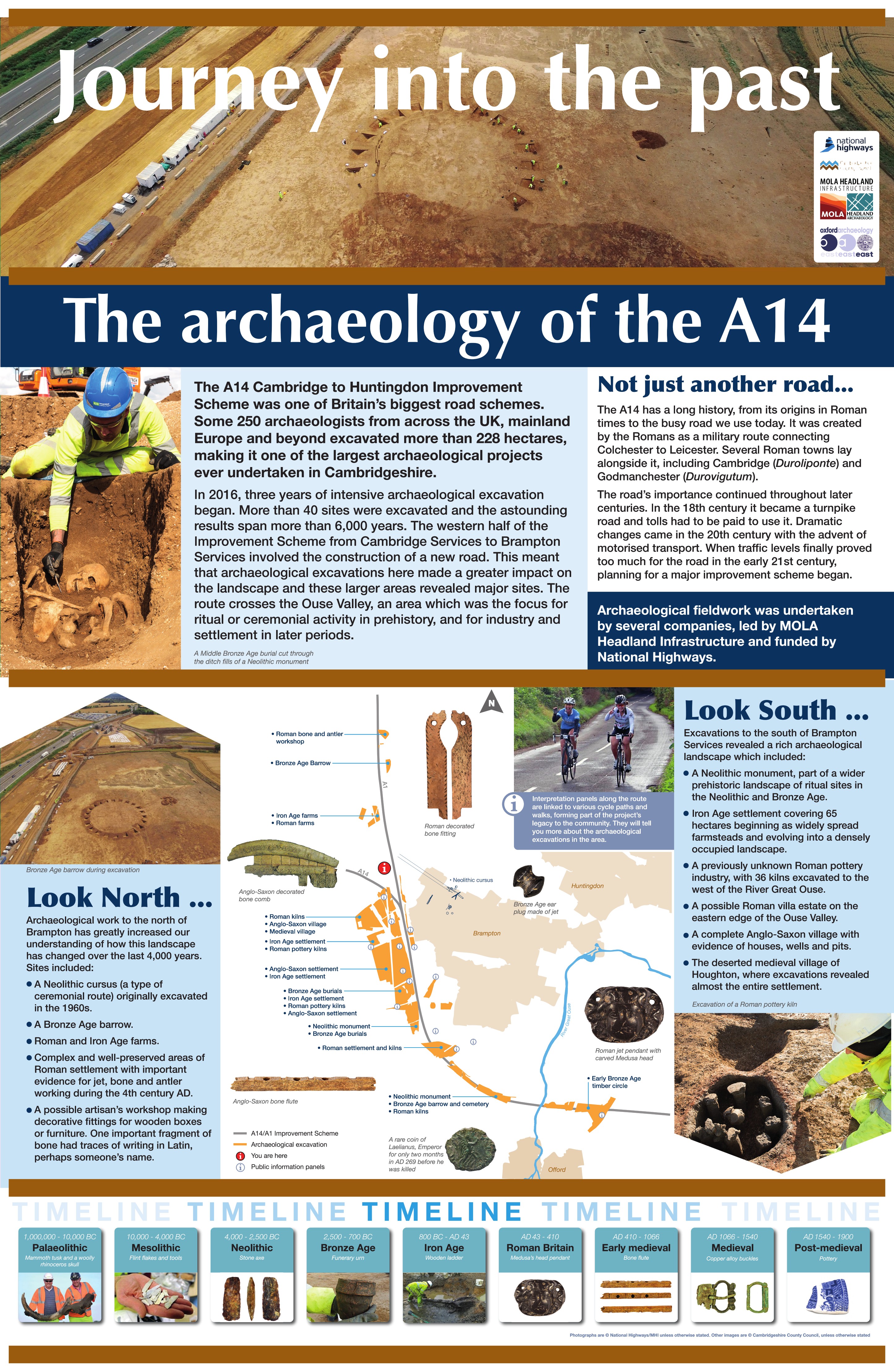
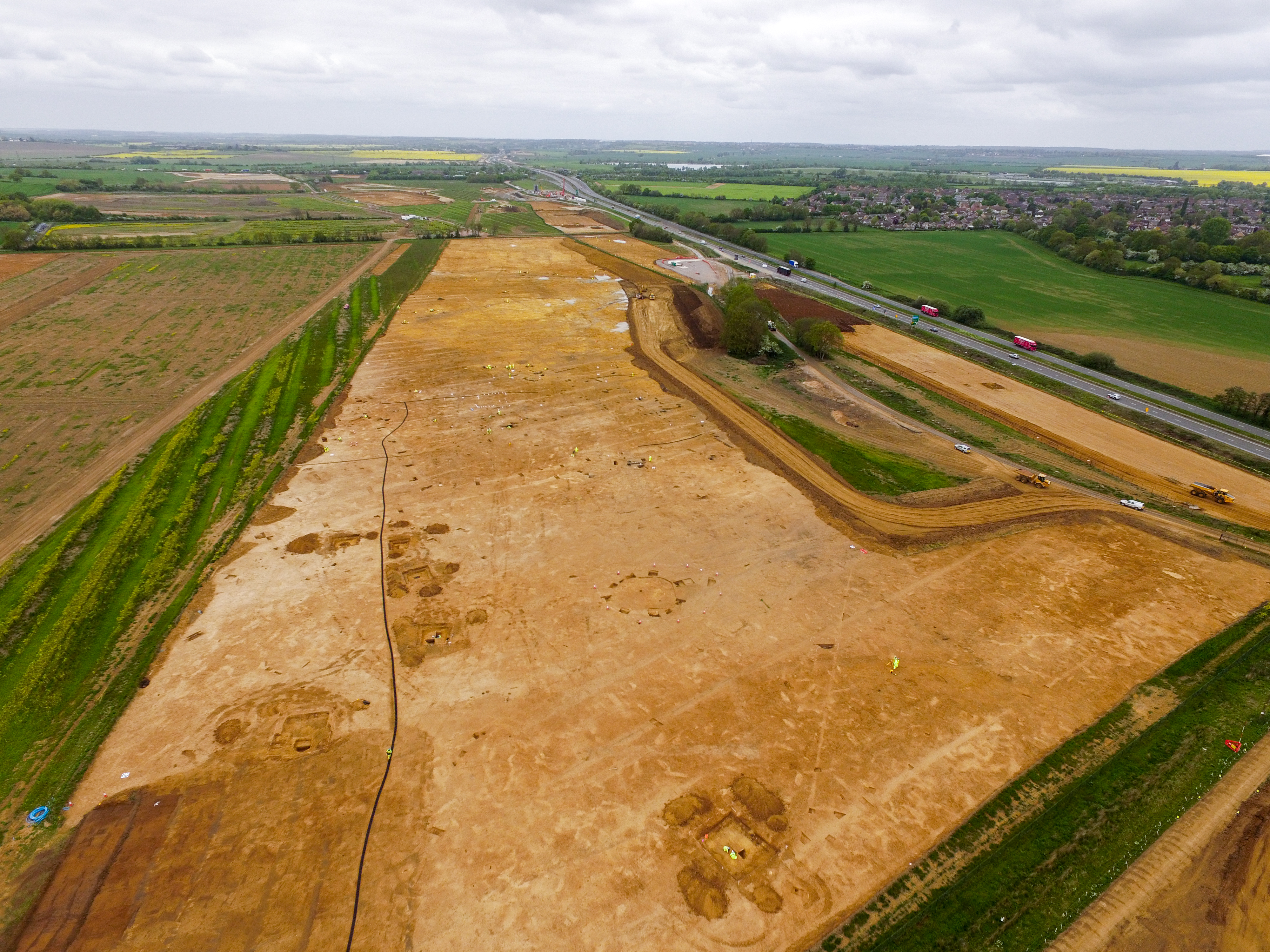
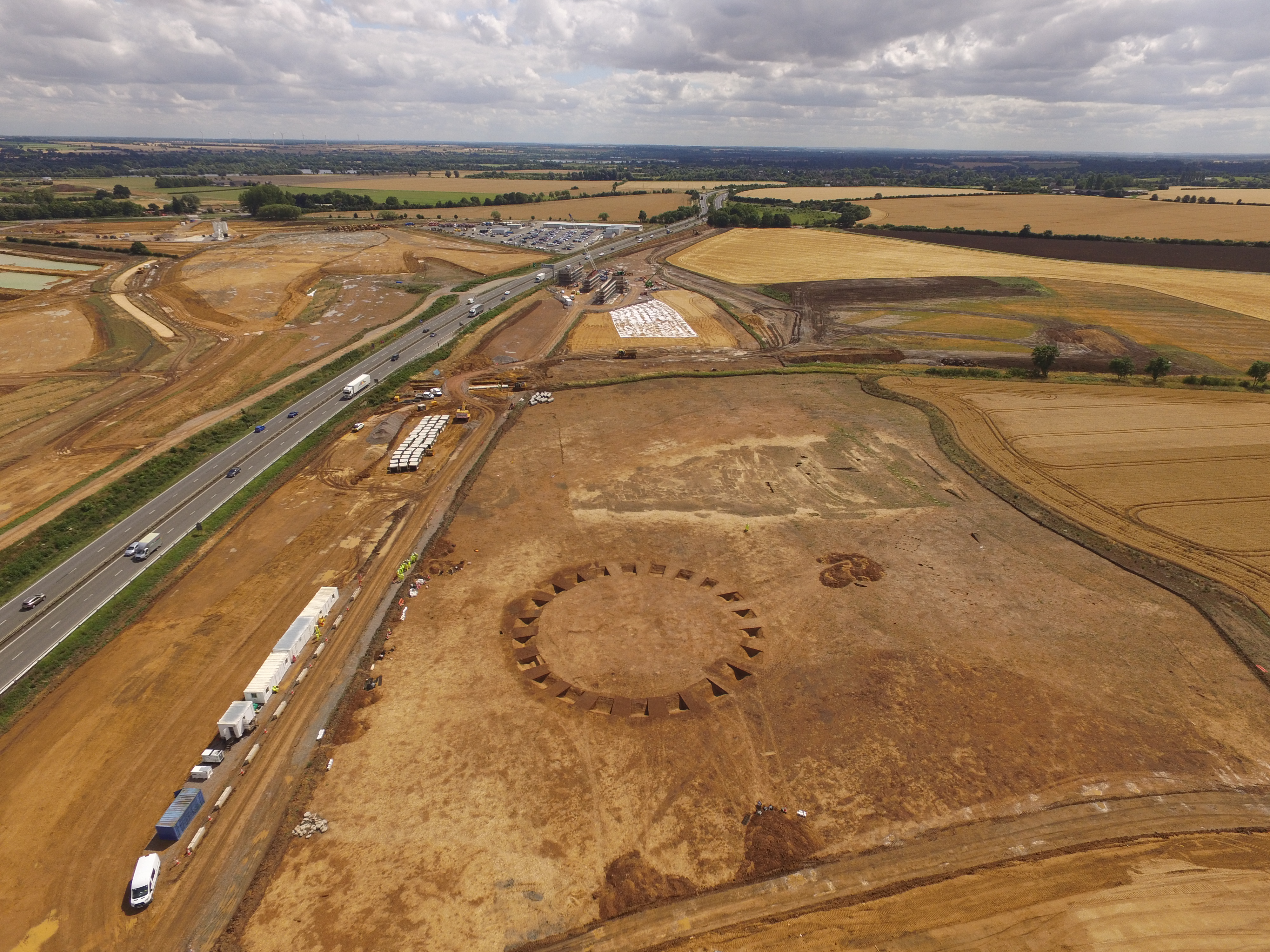
In 2016, three years of intensive archaeological excavation began. More than 40 sites were excavated and the astounding results span more than 6000 years. The western half of the scheme involved the construction of a new road. This meant that archaeological excavations here made a greater impact on the landscape and those larger areas revealed some major sites including ritual or ceremonial activity in the prehistoric period, and industry and settlement in the Roman to medieval periods.
To the north of Brampton, archaeological work has greatly increased our understanding of how this landscape has changed. Sites included a Neolithic cursus, a Bronze Age barrow, Roman and Iron Age farms, Roman settlement and a possible artisan's workshop creating fittings for wooden boxes or furniture.
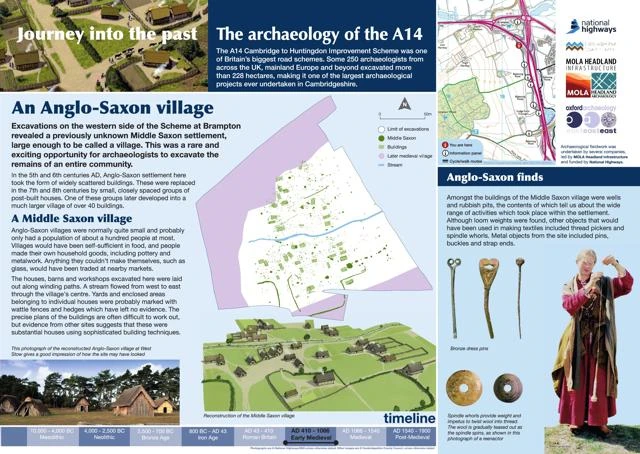
to the south of Brampton, sites included a major Neolithic monument, Iron Age settlement covering 65 hectares, a Roman pottery industry comprising 36 excavated kilns, a possible Roman villa estate, a Middle to Late Saxon village and the deserted medieval village of Houghton.
Find out more
Cambridgeshire Historic Environment Records
Iron Age settlement and Roman enclosures, 1km east of Weybridge Farm, Brampton
Houghton deserted medieval village
Online project archive
A14 Cambridge to Huntingdon Improvement Scheme
A14 Road Trip to the past storymap
News
Secrets of Deserted Villages: What Can Historical Documents Add to Archaeology | MOLA