A14 Improvement Scheme - Board 30 Brampton Wood north
Description
The A14 Cambridge to Huntingdon Improvement Scheme was led by MOLA-Headland Infrastructure (a consortium of Museum of London Archaeology and Headland Archaeology) and was funded by National Highways. These interpretation boards were installed by Cambridgeshire County Council with Oxford Archaeology East as part of a project funded by National Highways.
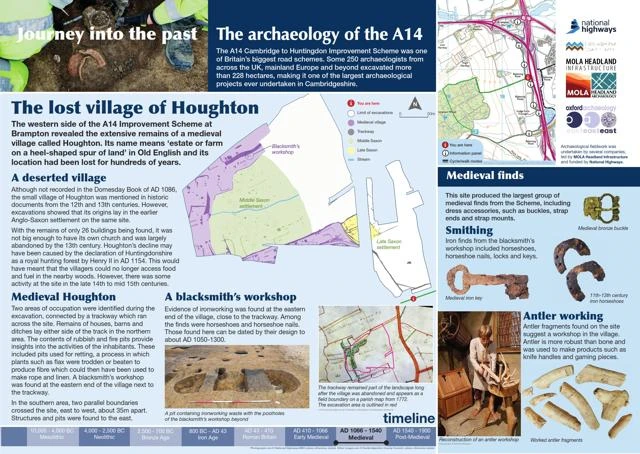
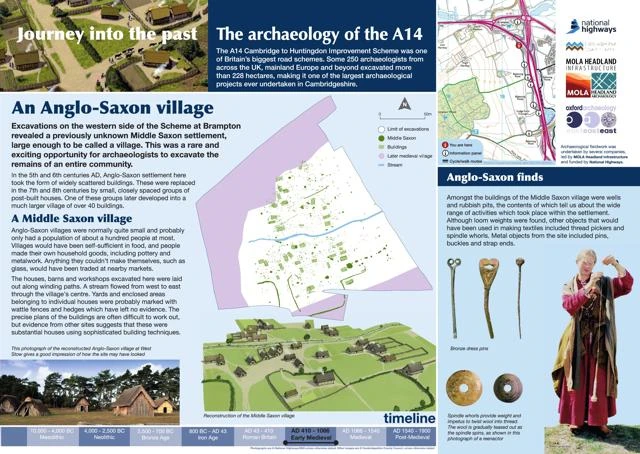
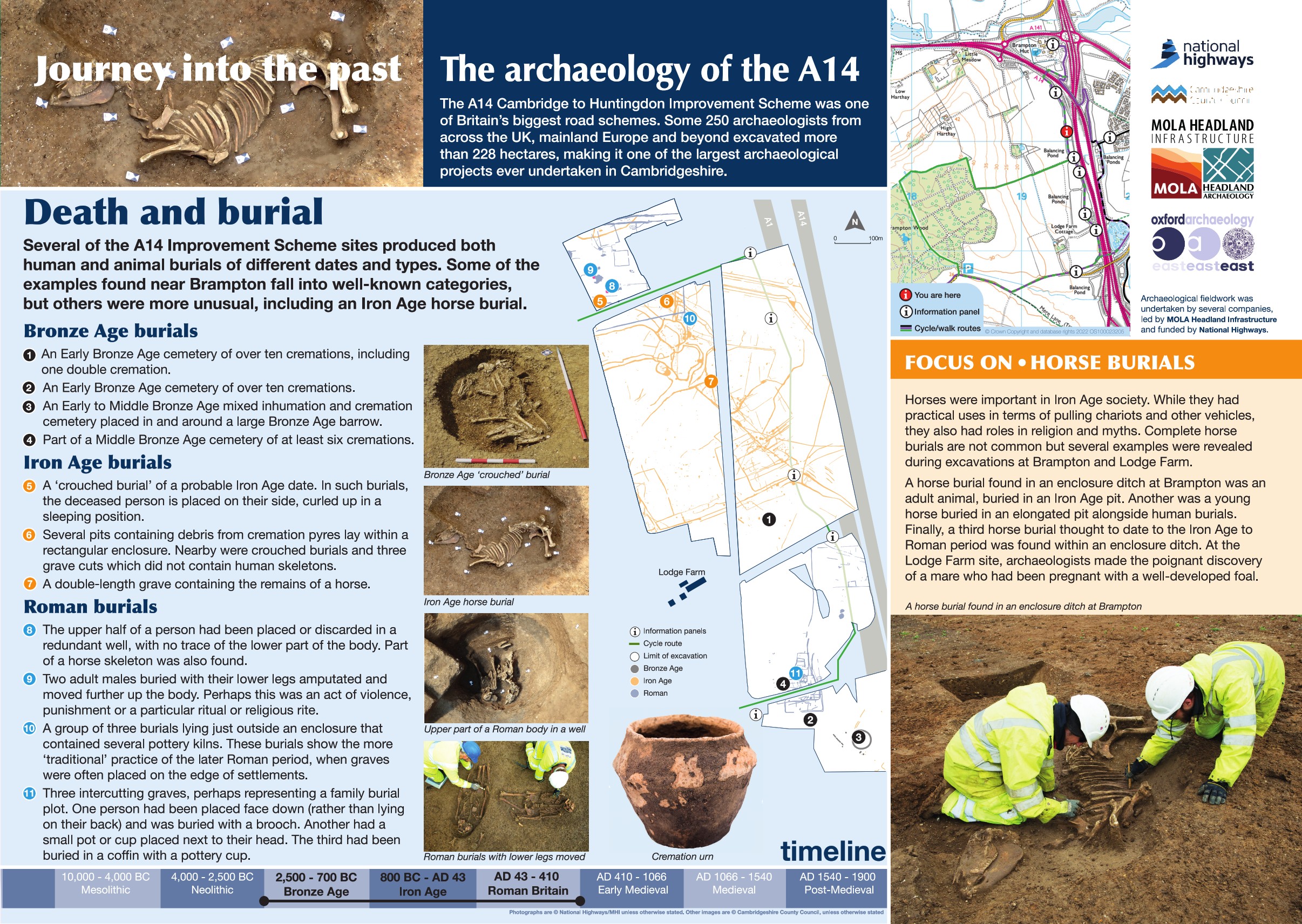
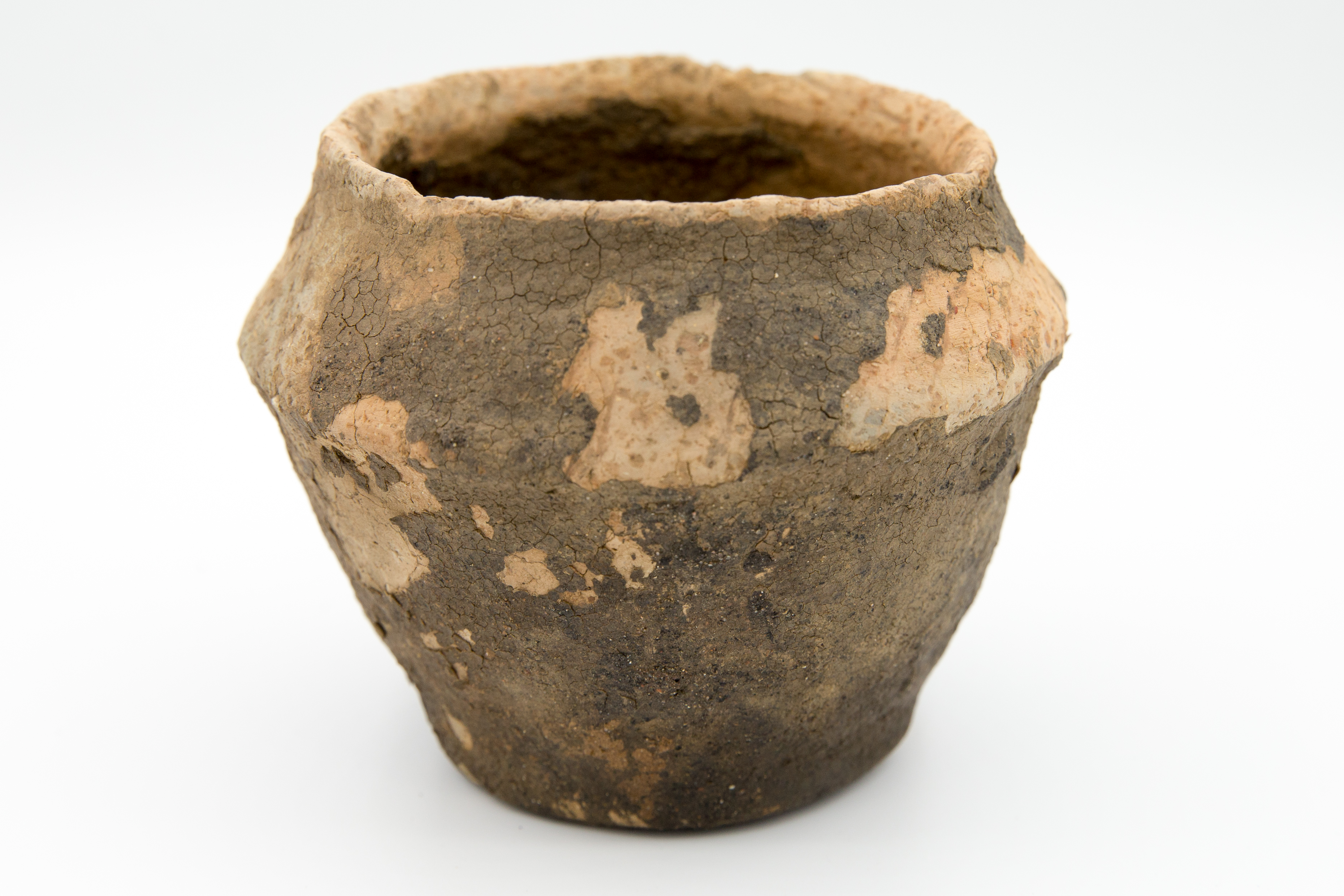
Excavations along the A14 route revealed a fascinating range of human and animal burials spanning thousands of years. These discoveries provide unique insights into how communities lived—and commemorated their dead—through different periods of history.
Four Bronze Age burial sites were identified:
- Three cremation cemeteries, where remains were burned and buried.
- One mixed cemetery, containing both cremations and inhumations (burials of whole bodies).
These practices reflect the varied funerary traditions of the time.
Iron Age burials from three locations included:
- A crouched burial, where the individual was placed on their side in a curled, sleeping-like position.
- Cremations.
- An extraordinary horse burial, found in a double-length grave—an unusual and rare discovery.
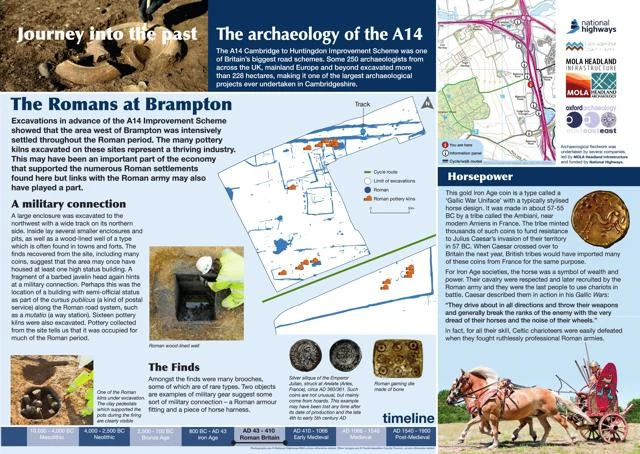
Roman burials were more extensive, found at four sites. While some were traditional, others were strikingly unusual:
- A burial in a well, containing only the upper half of a person alongside part of a horse skeleton.
- Two adult males buried with their lower legs amputated and repositioned higher up the body.
- A group of three intercutting graves, including one individual placed face down.
- One site with a more conventional arrangement of three graves.
These findings highlight the diversity—and sometimes mystery—of burial practices across time.
Find out more
Cambridgeshire Historic Environment Records
Iron Age to Roman enclosures, Brampton Hut, Alconbury (TEA 7c west)
Roman kilns, inhumations and enclosures (TEA 7a & 10), Brampton
Online project archive
A14 Cambridge to Huntingdon Improvement Scheme
A14 Road Trip to the past storymap
News