A14 Improvement Scheme - Board 13 Fenstanton
Description
The A14 Cambridge to Huntingdon Improvement Scheme was led by MOLA-Headland Infrastructure (a consortium of Museum of London Archaeology and Headland Archaeology) and was funded by National Highways. These interpretation boards were installed by Cambridgeshire County Council with Oxford Archaeology East as part of a project funded by National Highways.
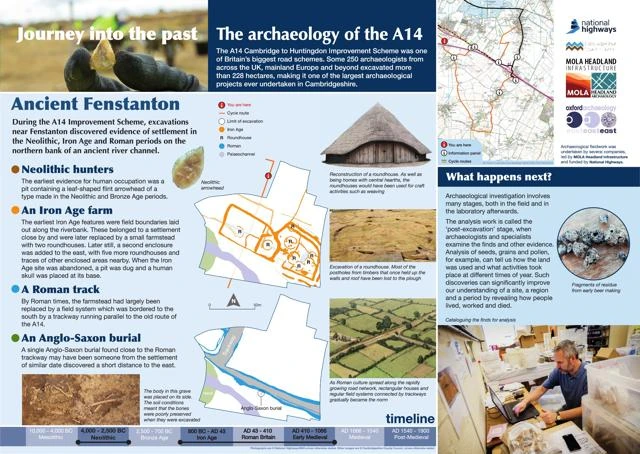
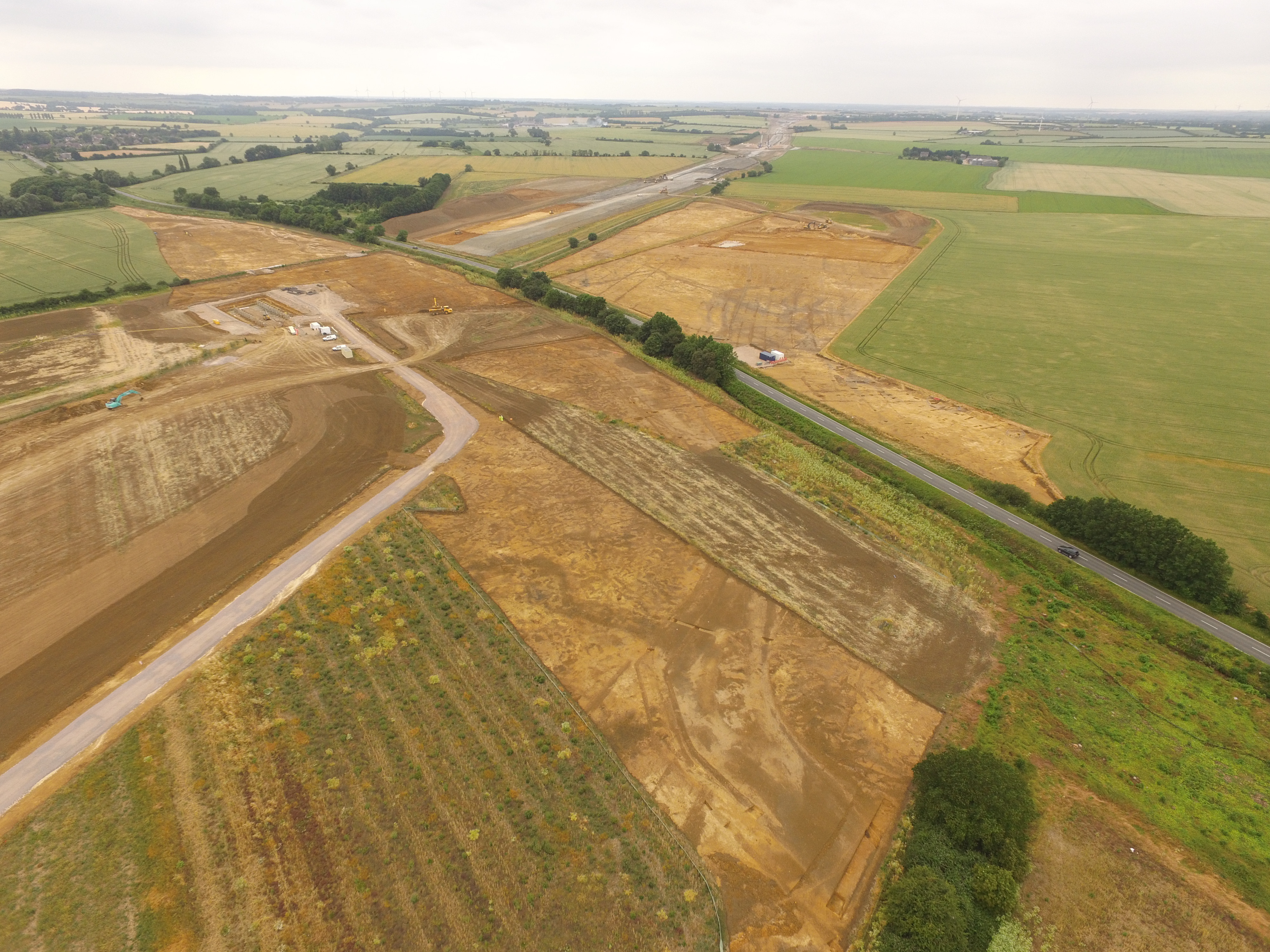
Recent excavations at Fenstanton uncovered one of the largest archaeological sites in the area, stretching nearly a mile from Hilton Road to Potton Road. This work focused on a landscape already known for its rich cropmark remains—clues visible from the air that hint at buried archaeological features.
The earliest evidence of human activity dates back to the Neolithic period, when people began clearing trees and digging pits. This was followed by the first signs of farming and settlement during the Bronze Age.
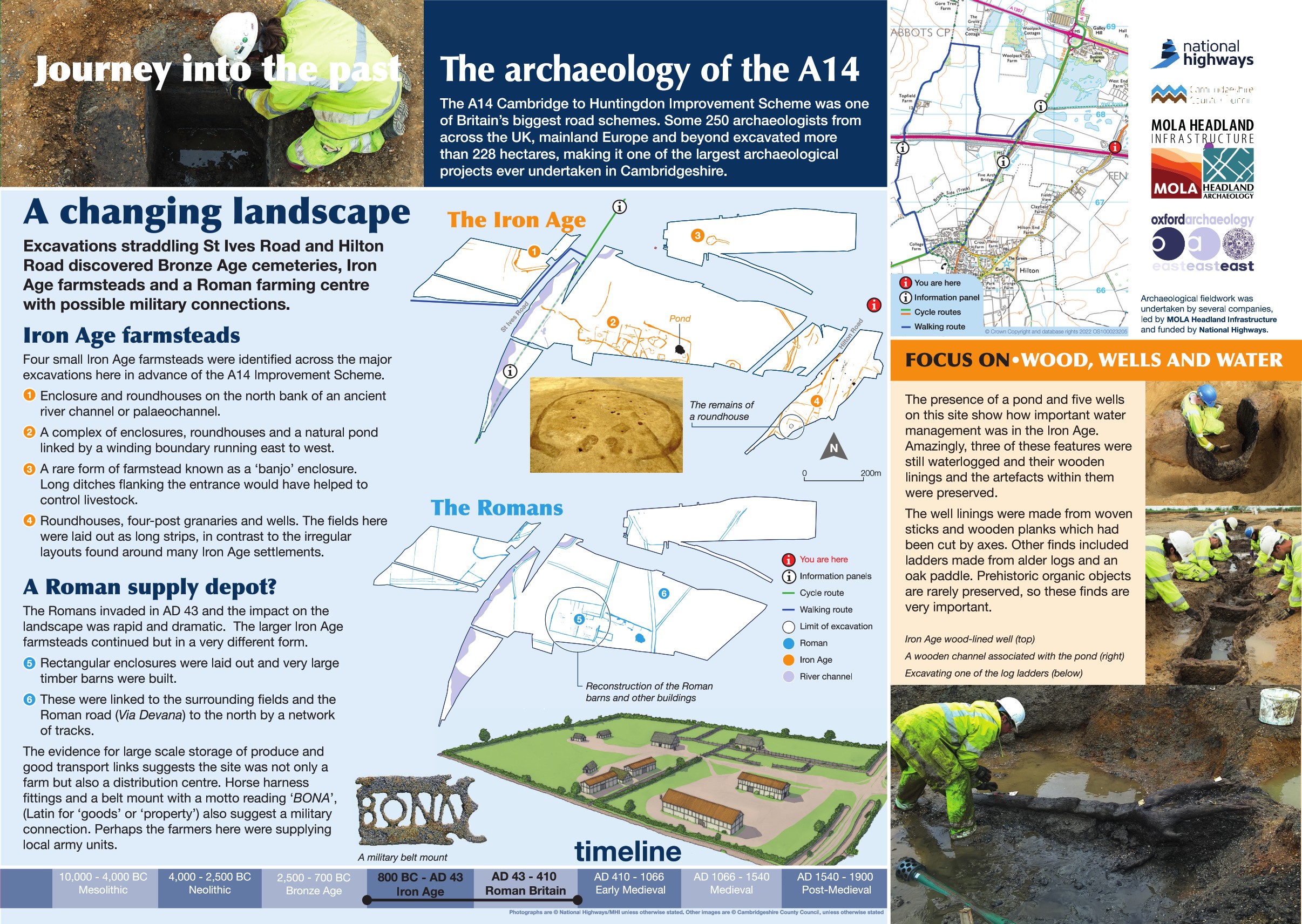
In the Early Iron Age (around 800–350 BC), small-scale activity took place, including the digging of waterholes and the construction of a few simple structures. By the Middle to Late Iron Age (350 BC–AD 43), the landscape had changed significantly, with a network of enclosures suggesting more organised farming and settlement.
When the Romans arrived, they introduced a new, more regular field system. This marked the beginning of more intensive use of the land, including the building of structures, cremation burials, quarrying, and even the operation of several kilns.
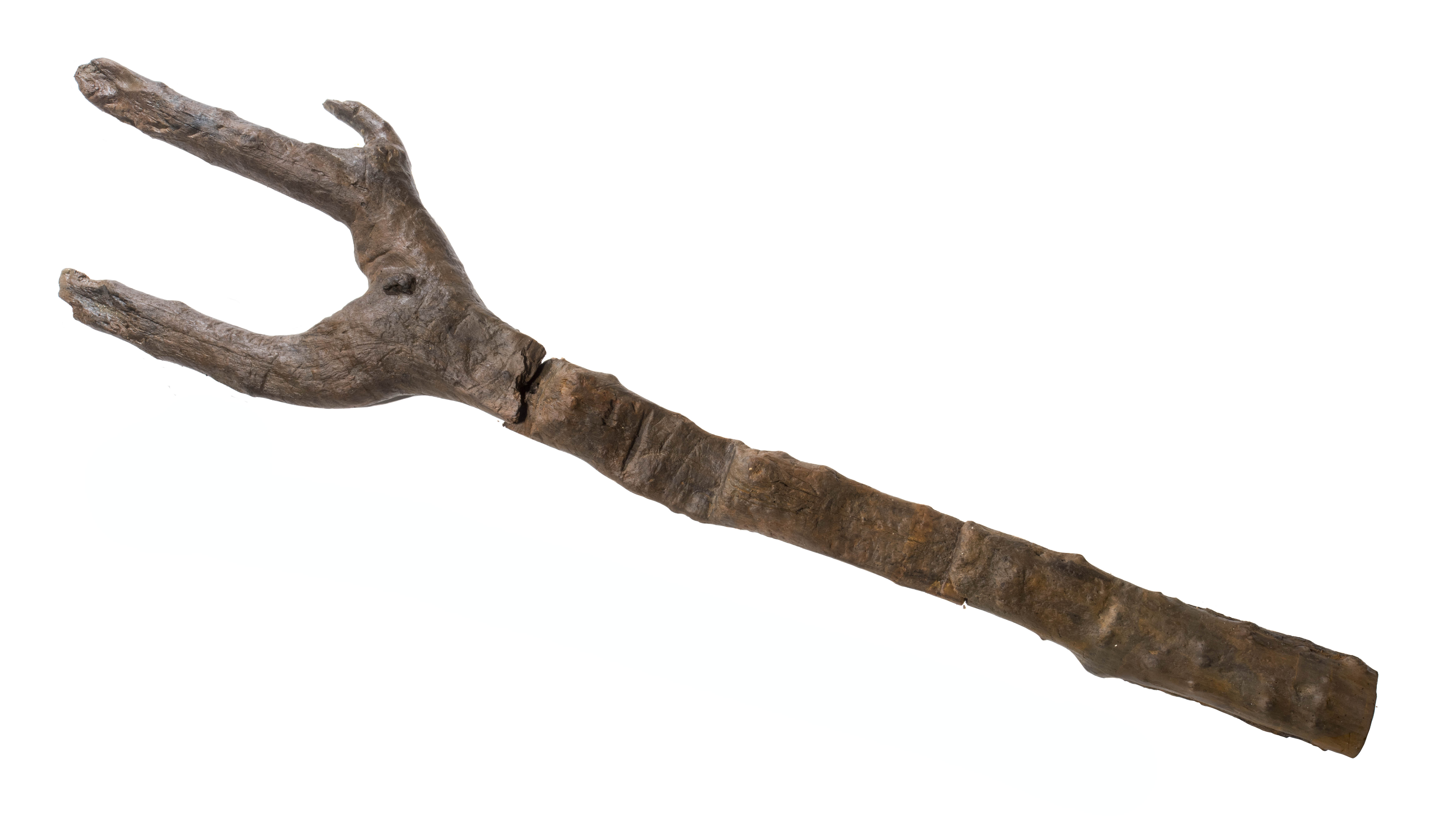
The presence of a pond and several wells show how important water management was. Wood does not survive particularly well on archaeological sites - wet conditions are required - which makes wells and ponds important discoveries. The wells in this area were still waterlogged, meaning the wooden planks and woven sticks used to line them were still present. Other organic material included prehistoric log ladders and oak paddles.
Together, these discoveries paint a vivid picture of how people lived, worked, and shaped the Fenstanton landscape over thousands of years.
Find out more
Cambridgeshire Historic Environment Records
Early to Middle Iron Age settlement
Online project archive
A14 Cambridge to Huntingdon Improvement Scheme
A14 Road Trip to the past storymap
News
The many lives of objects found along the A14C2H | MOLA
Archaeological finds: A human connection to the Cambridgeshire landscape through time | MOLA